
Waters, Houten
Our neighbourhood. Our energy.
Help build a virtual neighbourhood battery in Waters.
Why should you have to figure out the energy transition on your own? With MyGrid you can build a virtual neighbourhood battery together with your neighbours: home batteries that work together to use energy better.
We are looking for residents in Waters who want to help build it. You bring what the neighbourhood wants. We help with the organisation and the technology.
Sign up without obligation and invite your neighbours. You do not have to buy a battery now.
Net metering in the Netherlands ends on 1 January 2027. You will still receive a payment for the electricity you feed back. Together we look at how you can get more out of your own solar power. Read the Dutch government explanation.
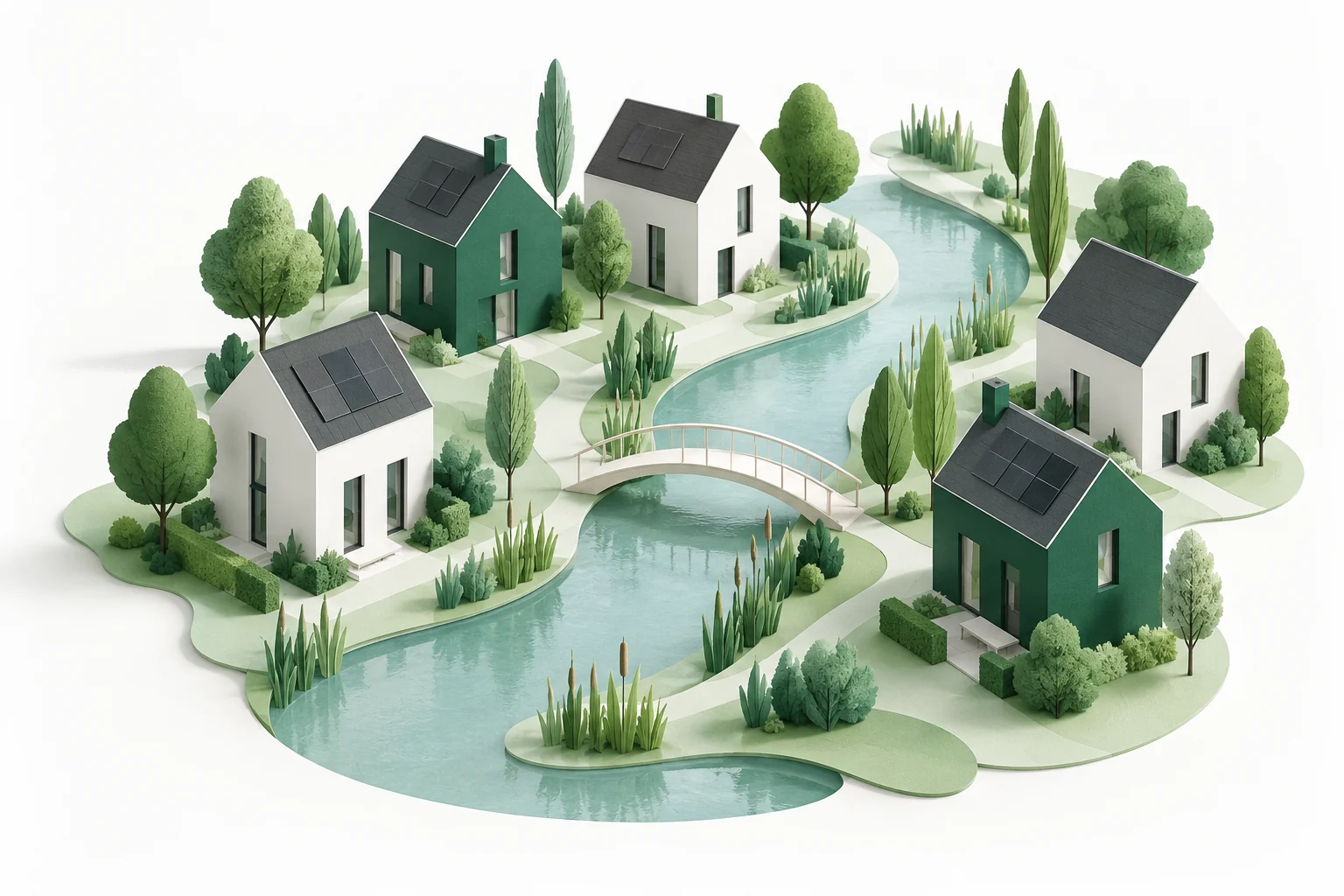
Why now
In many regions the electricity grid is under pressure. Together we explore how handling local generation and storage more cleverly can help in this neighbourhood.
More about grid congestionHow a virtual neighbourhood battery works
A virtual neighbourhood battery consists of home batteries at residents’ homes. Through the MyGrid platform, we coordinate when they charge and discharge. This can help use available energy more intelligently and limit simultaneous peaks in the neighbourhood.
- 1
Store energy at home
A home battery stores electricity for later use, such as solar power that is available during the day.
- 2
Coordinate intelligently with the neighbourhood
Using the agreed measurement data, we assess when charging or discharging makes sense. We take account of energy use in the neighbourhood and what the local electricity grid allows.
- 3
Make better use of energy together
By coordinating when batteries charge and discharge, they can help make energy available at useful times and limit simultaneous peaks.
We make the agreements together in Waters
Residents and MyGrid decide the precise operation together. We consider what you want, the installations already present, energy contracts and the possibilities of the local electricity grid. Before anyone commits, we set out the agreements on control, available capacity, data use, costs and any compensation. This gives each neighbourhood an approach that fits.
More about the virtual neighbourhood batteryChoose how you want to take part
Pick what suits you. You can still change your choice in the form.
Where Waters stands now
- Stage
- Collecting interest
- First goal
- 50 interested households
- First meeting
- Date still to be agreed
- Verified households
- We are mapping the interest in the neighbourhood. As soon as the number of interested households has been checked, we show it here.
Still to decide
- Which questions the neighbourhood wants answered first.
- When and where a first introductory meeting fits.
- Who from the neighbourhood wants to help organise.
Interested households are not the same as confirmed participants in a project.
Who decides what
A neighbourhood initiative only works when it is clear who decides what.
You decide
- What the neighbourhood wants to achieve.
- Whether you want to continue after the first conversation.
- Whether you want to take part yourself.
MyGrid handles
- The organisation of the process and the meetings.
- The feasibility study in the neighbourhood.
- A technical proposal based on what you want.
Costs, how a battery is controlled, how data is used and the terms for leaving are made clear before anyone commits to anything.
Experience from other neighbourhoods
MyGrid has neighbourhood-project experience in Amsterdam-Sporenburg and is involved in Flex met de wijk in Hilversum.
For Waters we want to explore with residents what is feasible.